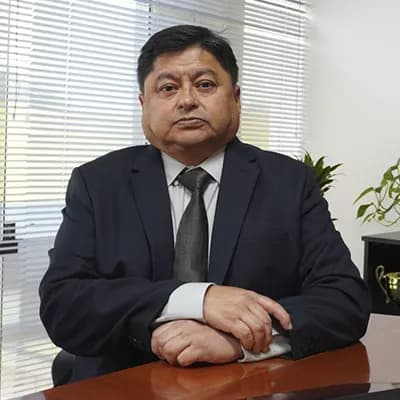
César Riofrío: “There are still major deposits to be discovered in Peru, but conditions are lacking to explore them”
The head of the Core Shack at proEXPLO 2026 warns that the country maintains strong prospectivity in copper and precious metals, but faces regulatory and social hurdles that are slowing new exploration investments.
Lima, April 15, 2026. Peru remains one of the most geologically prospective territories in the world, but this appeal is not translating into new discoveries at the pace required by global mineral demand. This is according to César Riofrío, head of the Core Shack at proEXPLO 2026, who notes that while there are still major deposits yet to be found, exploration development faces significant constraints.
“Peru has high prospectivity not only in copper, but also in gold, silver, and base metals such as zinc, lead, and tin. There is still much to be discovered,” he said in an interview with Minería y Energía magazine. However, he stressed that this potential will not materialize unless conditions for launching new projects improve.
Among the main obstacles, Riofrío identifies two key factors: social acceptance and permitting. On the former, he highlights the need for more sustainable mining that integrates communities and respects the environment. On the latter, he warns that regulatory processes for initiating exploration and production activities remain a significant barrier.
“The main challenge is to unlock permitting. Without permits, we will not be able to move forward in bringing our resources into value,” he said.
At the global level, the specialist also points out that the mining industry faces a growing supply problem. The scarcity of raw materials such as copper and gold is emerging as a structural challenge, amid rising demand driven by the energy transition and technological development.
In this context, Peru competes with other countries in the region that are advancing more quickly in their exploration pipelines. Riofrío cites Chile, with world-class operations such as Collahuasi, Escondida, and Chuquicamata; Argentina, with increasing momentum in the San Juan province; and Ecuador, with projects such as Fruta del Norte and Cascabel.
Despite this, he maintains that the country retains important comparative advantages, especially along the Andean belt, which hosts one of the richest mineral endowments on the planet. “We are part of a privileged geological belt, but we need to better leverage that knowledge and create synergies to move forward more quickly,” he noted.
Projects in the pipeline
Regarding the local portfolio, he mentions several projects that could boost exploration if the right conditions are created, such as Río Blanco, La Granja, Michiquillay, and Conga in the north; as well as Haquira, Trapiche, and initiatives along the southern coast between Ica and Arequipa.
Riofrío also highlights that the industry is already incorporating new technologies into exploration processes. The use of artificial intelligence, big data, and geological modeling has expanded across both major companies and junior firms, improving target identification and reducing risks.
However, he warns that technical challenges are also evolving. New deposits are increasingly deeper, lower grade, or more metallurgically complex, requiring better-trained professionals and the development of more advanced technologies.