proEXPLO 2026 to Address Andean Metallogenic Fertility in Copper Porphyry Exploration
Osvaldo Miguel Rabbia will explain why understanding continental tectonic dynamics is key to identifying where large copper deposits are concentrated and how to reduce exploration risk.
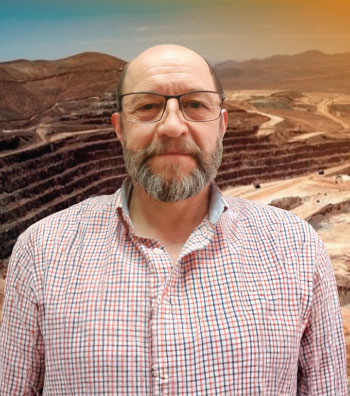
Lima, March 26, 2026.- As part of proEXPLO 2026, one of the central highlights will be the keynote lecture by Osvaldo Miguel Rabbia, Associate Professor at the Institute of Applied Economic Geology, University of Concepción (Chile), who will address the metallogenic fertility of copper porphyry deposits from a continental perspective.
According to the specialist, metallogenic fertility refers to the capacity of a geological region to generate large concentrations of copper. Rabbia will propose complementing the traditional analytical approach, focused on specific districts, with a broader perspective that considers tectonic and geodynamic processes operating at regional and continental scales.
Rabbia explains that a large copper deposit does not depend solely on local conditions. Its formation is linked to the dynamics of the Andean magmatic arc and the degree of coupling between tectonic plates during subduction. These large-scale processes control the metallogenic productivity of entire segments of the Andean orogen.
Comparable Metrics
This integrated perspective makes it possible to compare different metallogenic belts using objective metrics, such as kilotonnes of copper generated per million years and per kilometer of magmatic arc. In this way, it becomes possible to distinguish between a truly fertile region and one that has simply been more extensively explored or is better exposed at surface.
The expert explains that metallogenic fertility results from multiple geological factors interacting over time: the intensity and duration of compressional episodes, crustal architecture, plate convergence rates, and the physicochemical conditions of the magmatic system. All these elements influence the endowment, that is, the total volume of copper that can be concentrated within a geological belt.
In summary, the lecture will seek to connect the understanding of Andean geodynamics with concrete exploration decisions. It is not only about explaining how Andean porphyry systems form, but about using that knowledge to improve targeting, prioritize areas with higher potential, and make the search for new large copper systems more efficient.
Professional Profile
Osvaldo Rabbia is a geologist with a PhD in Economic Geology and more than 30 years of experience in Andean metallogenesis. He has supervised more than 50 undergraduate and graduate theses and delivered over 35 specialized courses for the mining industry in Chile and abroad. He has authored more than 30 publications in indexed journals and book chapters, as well as over 100 contributions to scientific conferences.
With this comprehensive perspective, proEXPLO 2026, to be held from May 4 to 6, 2026, at the Centro de Exposiciones Jockey in Lima, is positioned as a forum not only to discuss where the next major Andean porphyry deposits are located, but also how to improve the conceptual and quantitative tools needed to discover them.